System Hub
14 regulated allergens

14-allergen recipe chart for the pass

Tick which of the 14 allergens are in each dish. Staff answer at the pass — not from a folder in the office. Free to build. Email to keep it in a 14-day Food Safety trial. No card.

Last reviewed: . Reviewed by Nitin Patel. Drafts are prepared with AI assistance and checked by him before publication.

Check your email

Your chart is in a 14-day Food Safety trial. Confirm the email to choose a password and open it on a phone at the pass.

Not a substitute for knowing the recipes. Does not replace Natasha’s Law labels on PPDS packs.

Add the dishes you serve. Then tick the 14 allergens for each one.

0 dishes. Keep this chart in a 14-day trial — no card.

Keep this chart

We save it into a 14-day Food Safety trial. No card. Then £5/week incl VAT if you stay.

By keeping this chart you agree to the Terms and Privacy. Unsubscribe from trial emails any time. Not a promise of inspection outcome.

What the 14 allergens are

UK food businesses must tell customers if a food contains any of the 14 allergens listed in law. The Food Standards Agency publishes the list and the duty. FSA allergen guidance for food businesses is the source. Do not treat a software chart as a substitute for knowing the recipes.

The 14 are: celery, cereals containing gluten, crustaceans, eggs, fish, lupin, milk, molluscs, mustard, peanuts, sesame, soybeans, sulphur dioxide and sulphites, and tree nuts.

Why a chart at the pass beats a folder in the office

Guests ask during service. The head chef is on the pass. If the only copy is a printed matrix from last spring, staff guess. A chart linked to the diary — 14 allergens per menu item — is the same information, where the question is asked.

Chart, menu, and PPDS are different jobs

The recipe chart is for staff. A guest-facing allergen QR code is for the table. Natasha’s Law labels are for food prepacked for direct sale. Mixing those three jobs is how venues think a QR code “covers allergens” and still fail a PPDS check.

How System Hub stores the chart

Food Safety includes an Allergen Recipe Chart — 14 regulated allergens per menu item, in the same diary as daily checks. The free tool on this page writes your dishes into that trial so you are not starting from an empty kitchen. Share a public page through Widget if guests should read it themselves. Then Food Safety from £5/week per location incl VAT via Stripe.
What does an allergen recipe chart have to show?

Each dish against the 14 regulated allergens, including the ones that arrive in a bought-in sauce. The chart is wrong if it lists the garnish and forgets the stock. When the dish changes, the chart changes before the next service, not at the next menu print.

“May contain” is for a real cross-contact risk — a shared fryer, a shared glove, a bakery tin. It is not a way to avoid filling the grid. If you write “may contain” on every cell, the guest has no information and you have not assessed the dish.

Prepacked for direct sale food needs a label with the allergens emphasised. The chart on the wall does not label the boxed sandwich. Keep those as two jobs. The QR code, if you publish one, has to open this chart, not a photograph of last summer’s menu.

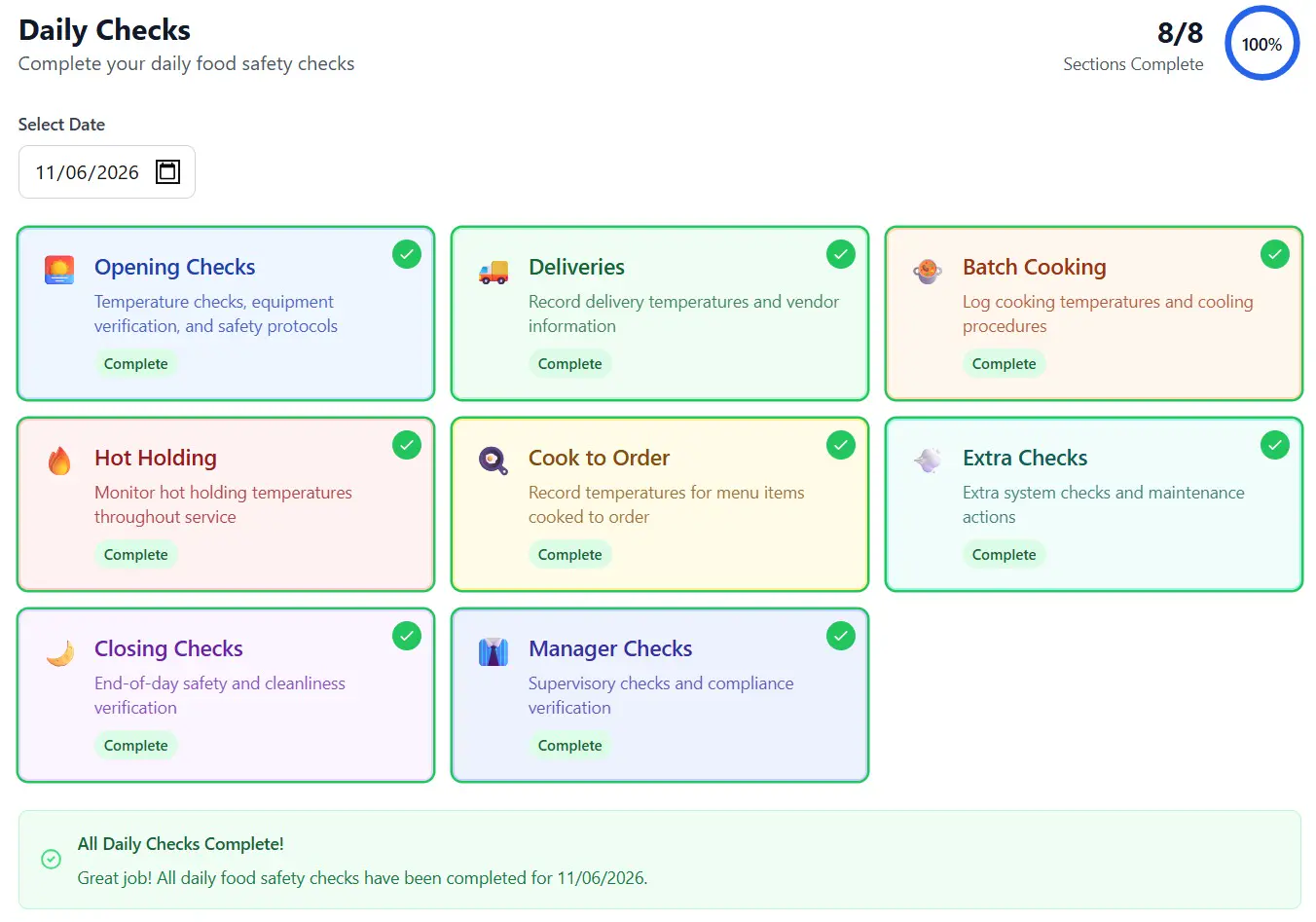
Daily checks. The allergen matrix is a separate page.
The diary is not the matrix. The matrix is the 14 allergens for tonight's menu.
  • 14 allergens, every dish you sell, including specials.
  • Bought-in ingredients counted, not only what you add on the pass.
  • A named owner for the update.
  • PPDS labels are separate from the chart.

FSA: food allergy and intolerance. Food Information Regulations 2014.

The chart is not the label

What is a 14-allergen recipe chart?
It is a matrix of menu items against the 14 allergens UK food law requires you to inform customers about. Staff use it at the pass when a guest asks. FSA publishes the list and the duty to provide information. Source: FSA allergen guidance for food businesses.
Does a recipe chart replace Natasha’s Law labels?
No. Natasha’s Law is about labelling food prepacked for direct sale (PPDS). A recipe chart and a guest-facing QR code help with menu questions. They do not replace the name and allergen labelling on a PPDS pack. See allergen menu QR codes.
Where should the chart live during service?
Where the person who answers the guest can open it — the pass, a tablet, or a public page. A binder in the office is the same failure mode as an SFBB pack filled in at 11pm.
How much is System Hub Food Safety?
Build the chart free. Email to keep it in a 14-day Food Safety trial, no card. Then £5/week per location incl VAT via Stripe. The guest-facing QR page is the Widget module. Cancel anytime.